


.png)


.png)
.png)
.png)
Fleet Clean Air Zone compliance: how does your fleet stack up?
By SG Fleet | 17 March 2026
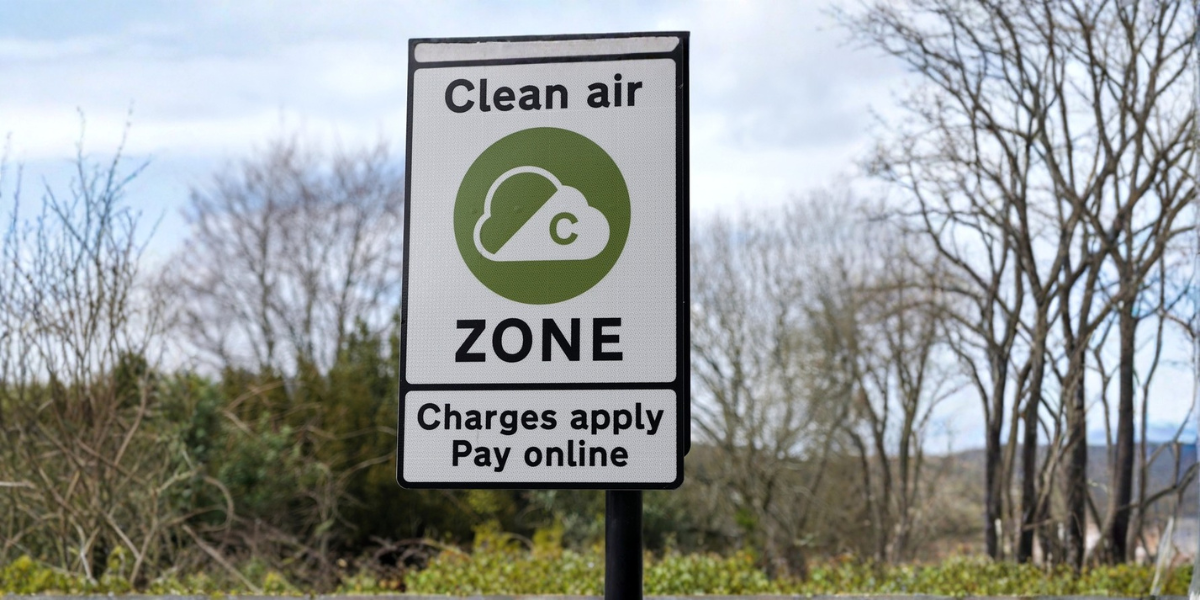
If your fleet drivers regularly head into UK city centres, there's a reasonable chance some of your vehicles are racking up daily charges you haven't budgeted for. Clean Air Zones (CAZ) are live and enforced, so knowing how to check if your fleet vehicles are CAZ compliant is absolutely crucial.
More cities are taking air quality and pollution seriously, so taking your fleet’s Clean Air Zone compliance seriously is as crucial now as it will ever be.
Which UK Clean Air Zones affect company fleets?
The seven active charging CAZs in England
England currently has seven cities operating charging Clean Air Zones: Bath, Birmingham, Bradford, Bristol, Portsmouth, Sheffield, and Tyneside (Newcastle and Gateshead).
The GOV.UK Clean Air Zone vehicle checker covers all seven with a single registration search, which is likely the fastest way to run a spot check across your entire fleet.
Each city runs one of four CAZ classes (A through D). These determine which vehicle types are charged.
Private cars are only liable in Class D cities, so if your fleet is predominantly cars, Birmingham and Bristol are the two that will hit your cost sheet directly.
Vans, HGVs, taxis, and coaches face charges across a wider range of cities and classes, making multi-city fleet operators particularly exposed.
What are CAZ non-compliance costs?
Charge rates vary a lot depending on the city and vehicle type.
For example, Birmingham charges non-compliant cars and LGVs £8 per day, with HGVs and coaches at £50 per day. On the other hand, Bristol charges non-compliant HGVs £100 per day.
Beyond that, if you miss the payment window, you'll find yourself facing a £120 Penalty Charge Notice (reduced to £60 if settled within 14 days), but that's on top of the original charge, not instead of it.
For fleets operating into Oxford, the situation is stricter still.
Its Zero Emission Zone is the toughest scheme in the UK: even Euro 4 petrol and Euro 6 diesel vehicles pay £4 per day. Only genuinely zero-emission vehicles pass through free of charge. See our guide to EV fleet transition if Oxford is a regular destination for your drivers.
Want to make your fleet CAZ compliant? Go electric with eStart.
At SG Fleet, our eStart solution is an end-to-end electric vehicle transition plan designed to make the switch to EVs as simple as possible. We work with you to understand your needs, business, and infrastructure so the change can't be easier. Get in touch today to get started.
London has ULEZ and LEZ running simultaneously
London operates two separate schemes that fleet managers need to account for independently.
The ULEZ runs 24/7 across all London boroughs, charging non-compliant cars £12.50 per day. The LEZ targets larger commercial vehicles, and non-compliant HGVs and coaches can face charges of up to £300 per day.
From 2 January 2026, the Congestion Charge increased to £18 per day. The previous blanket EV exemption ended in late 2025 and has been replaced by a tiered discount scheme.
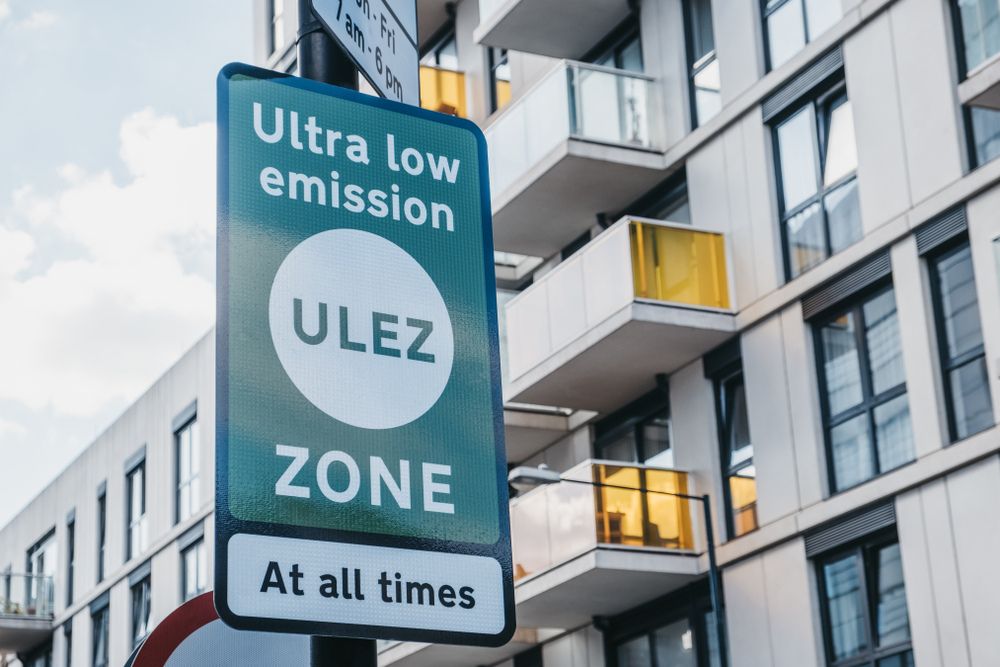
How to check if your fleet vehicles are CAZ compliant
Emissions standards that apply across all UK zones
The compliance threshold is consistent across all UK zones: Euro 4 for petrol vehicles (generally registered from 2006) and Euro 6 for diesel vehicles (generally registered from September 2015).
For large commercial vehicles, the standard is Euro VI. Battery electric vehicles are compliant in every active zone without exception.
Early hybrid models are a known grey area.
Some do not meet the standard despite appearing modern. Always check by registration number rather than model or year, as vehicle specifications can vary within the same model line. The GOV.UK vehicle checker is the only reliable tool for this, and it’s best to use it vehicle by vehicle, not fleet-wide by assumption.
Avoiding Clean Air Zone charges with an electric fleet
EV fleets eliminate CAZ exposure entirely
The most complete answer to Clean Air Zone compliance is electrification. Battery electric vehicles are compliant in every active UK charging zone (CAZ, LEZ, ULEZ, and ZEZ) with no daily charges applicable beyond the Congestion Charge.
As well as being more compliant, company car BiK tax on EVs are lower than petrol or diesel equivalents, so the transition delivers cost savings on two fronts simultaneously.
Fleets running mixed vehicle types (some compliant, some not) are carrying an ongoing and growing liability as the zone network expands. The most cost-effective point to address that is at the natural lease renewal cycle, which is exactly where a structured transition plan makes the biggest difference.
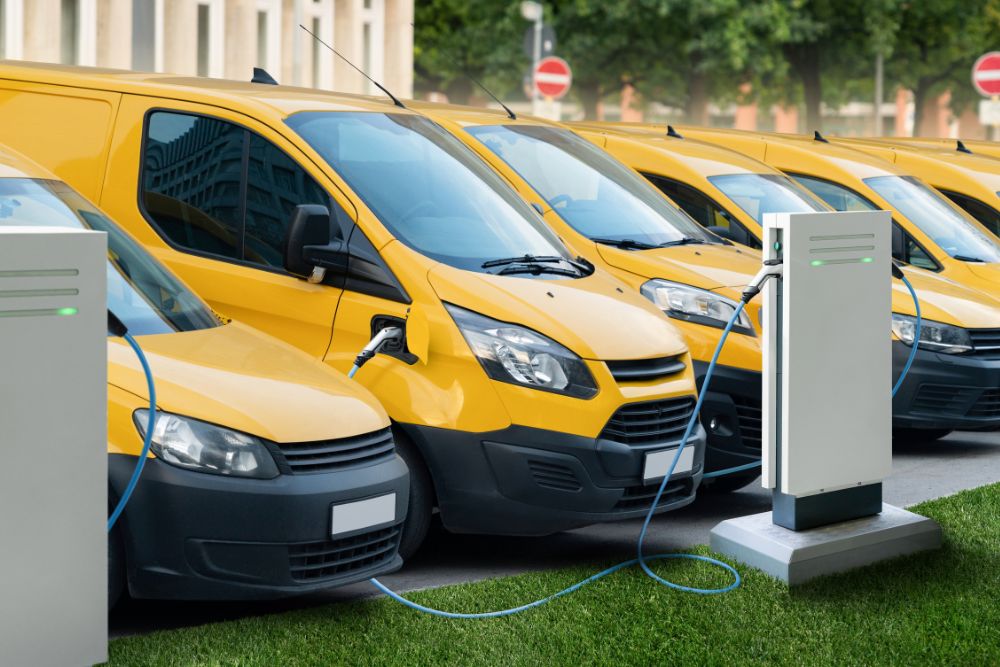
Plan Your EV Transition with eStart
We work with fleet operators on electrification through eStart, our end-to-end fleet transition planning service.
Rather than a generic EV push, eStart works around your existing lease end dates, your operational sites, and your driver profiles to create a realistic transition plan that moves you toward a fully compliant, lower-cost fleet without disrupting day-to-day operations.
If you want to offer EV access as an employee benefit at the same time, our Novalease salary sacrifice scheme lets employees lease new or pre-loved electric and hybrid vehicles directly from gross salary.
We use our corporate buying power to bring lease costs well below what employees could access individually.
Get in touch with SG Fleet today to start your EV transition.
FAQs
Which UK Clean Air Zones affect vehicle fleets?
Seven English cities operate charging CAZs: Bath, Birmingham, Bradford, Bristol, Portsmouth, Sheffield, and Tyneside. London operates the ULEZ and LEZ separately. Scotland has active LEZs in Aberdeen, Dundee, Edinburgh, and Glasgow.
How do I check if my fleet vehicles are CAZ compliant?
Use the GOV.UK "Drive in a Clean Air Zone" service and enter each vehicle's registration number. For Scottish LEZs, use mygov.scot. For London, use TfL's ULEZ checker. Always check by registration, not model year.
Can I avoid Clean Air Zone charges with an electric fleet?
Yes. EVs are compliant in all active UK CAZs, LEZs, ULEZ, and ZEZs, with no daily charges applicable. Lower BiK tax rates make the switch cost-effective beyond compliance alone.