


.png)


.png)
.png)
.png)
New cars and vans coming to the UK in 2026
By SG Fleet | 16 December 2025
The new cars coming to the UK in 2026 tell a clear story about where the market has settled. We’re beyond a transition phase that’s been defined by uncertainty or early adoption. Electrification is now baked into product planning, and manufacturers are focusing on making electric vehicles work across everyday segments.
Rather than headline-grabbing concepts, 2026 is bringing production-ready cars and vans designed to replace familiar models. Saloons return with better efficiency, and SUVs continue to dominate, but with more realistic electric packaging. Vans move decisively away from diesel assumptions altogether.
The shift of the UK’s new cars of 2026 is less about surprise and more about practicality.
Electric saloons and SUVs built on new platforms
A key theme for the new cars coming to the UK market is the arrival of vehicles built on clean-sheet electric architectures rather than adapted petrol platforms. These models are expected to define the next decade of product cycles.
BMW iX3 (Neue Klasse)
The new BMW iX3 is one of the clearest examples. Confirmed for a 2026 launch, it will be the first production model based on BMW’s Neue Klasse electric platform.
This version of the iX3 isn’t a conversion of an existing petrol SUV. It’s designed from the outset as an electric vehicle, with a focus on efficiency, range consistency, and software integration. BMW is working hard to position the Neue Klasse architecture as the foundation for multiple future models, something that could see the iX3 as an important marker for where its wider line-up is heading.
This intent is significant. Moving into 2026, electric cars are at the core of BMW’s commitments in its mid-size range rather than an alternative alongside combustion engines.
Electric SUVs are expanding into new size classes
Electric SUVs are still one of the most competitive categories when it comes to the new cars of 2026, but the focus is shifting from flagship models to more precisely sized vehicles.
‘Baby’ Range Rover Electric SUV
Alongside the full-size Range Rover Electric, Land Rover is developing a smaller electric SUV aimed at sitting a rung below the current Range Rover.
It’s been reported that this new model is expected to enter production in 2026, though there are rumours of a pushback. While final naming and specifications are still under wraps, it's clearly intended to bring the Range Rover design language and market space into a more compact electric format for everyday use rather than flagship luxury.
This approach is part of a wider trend. Instead of launching entirely new electric sub-brands, manufacturers are extending established nameplates into electric-only variants. Familiarity is becoming a selling point in its own right.
Want to get behind the wheel of one of 2026’s new electric cars?
We can help. The SG Fleet team supports drivers through our simple, low-risk Novalease solution with fixed monthly costs and easy management. Get in touch to learn more.
New EVs on the UK market are filling long-standing gaps
While SUVs dominate headlines of 2026, electric cars are quietly becoming more important, particularly compact models. After years where small EVs were either premium-priced or limited in capability, this year sees credible replacements for traditional hatchbacks and superminis.
Volkswagen ID.2 / ID.2all
The Volkswagen ID.2, previewed by the ID.2all concept, is expected to arrive in the UK in 2026. It is designed to sit where cars like the Polo once did, but as a fully electric model priced to be accessible rather than aspirational.
This matters because affordability has been one of the biggest barriers to EV adoption in the UK. The ID.2 is intended to normalise electric driving in the compact segment rather than treat it as a premium upgrade.
Cupra Raval and Skoda Epiq
Elsewhere in the VW Group, Cupra’s Raval and Skoda’s Epiq are both new cars coming to the UK this year. These vehicles share platforms and core technology but target slightly different audiences through design and positioning. What links them, though, is purpose. These aren’t experimental EVs, they’re designed to replace high-volume petrol cars with minimal compromise.
Vans are moving fully into the electric era
One of the most exciting new EVs on the UK market this year is actually in the commercial vehicle space. Electric vans are being developed as direct replacements for diesel workhorses.
Kia PBV Professional Range
Kia has confirmed that its new PBV (Platform Beyond Vehicle) professional range, including the PV5 electric van, will be available from 2026.
This is a ground-up electric van platform designed specifically for commercial use. Rather than adapting passenger car architectures, the PBV is focused on modularity, durability, and predictable running costs.
The PV5 is a major step because it shows how manufacturers are now treating electric vans as a core product category rather than a compliance exercise. Payload, range, and charging capability are being addressed together, rather than traded off against one another.
What is not arriving is equally interesting
In 2026, brand-new petrol or diesel platforms are virtually non-existent. Internal combustion engines continue mainly through updates and extensions, not clean-sheet designs. Manual gearboxes are increasingly absent from new announcements, too; something tied in with the number of new EVs on the UK market.
There are also fewer niche experiments. Manufacturers are concentrating on vehicles that fit clearly into existing buying patterns, rather than testing unproven formats.
Charging and range become more honest
As new EVs on the UK market mature, the way manufacturers talk about charging and range is changing. There is less emphasis on theoretical maximums and more focus on usable motorway range and charging speed.
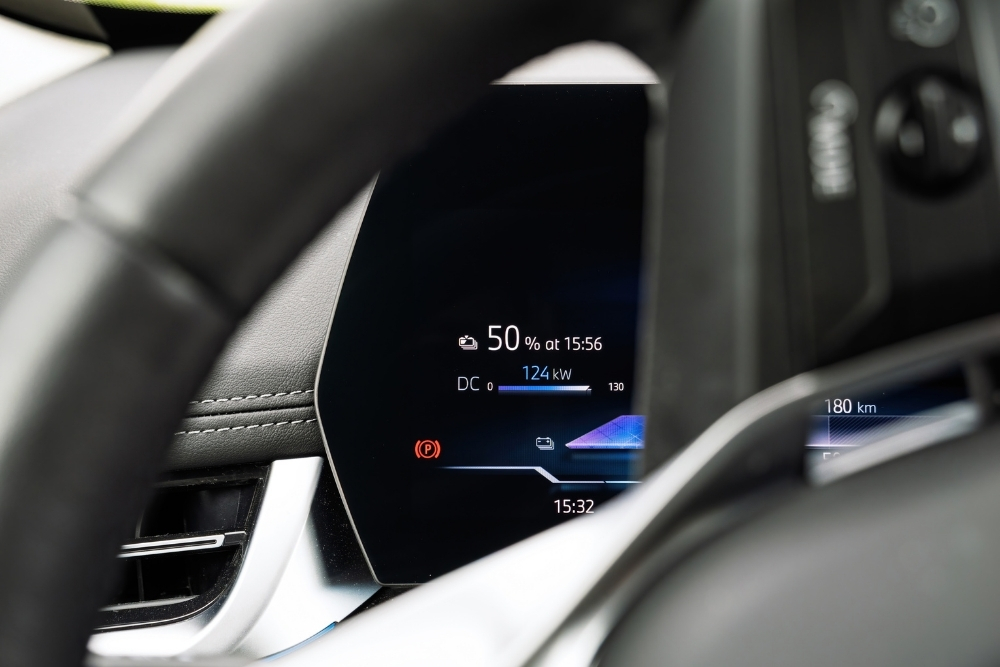
Many of the 2026 electric car models prioritise faster DC charging over larger batteries. That reflects a growing recognition that downtime, not just distance, defines real-world usability in the UK.
Want to access brand new EVs on the UK market?
As more new cars coming to the UK arrive as electric-first models, access becomes as important as availability. At SG Fleet, we support access to these vehicles through fully managed employee car benefit solutions, including Novalease.
Novalease provides a zero-risk, off-balance-sheet way to offer new electric and low-emission vehicles, with minimal administration and full HMRC compliance. It supports sustainability objectives while providing predictable costs and comprehensive reporting.
With experience across both personal and business lease-based schemes, we help you to get hold of the next generation of vehicles in a way that fits operational and financial realities. Get in touch with our team today to find out how we can get you moving.
FAQs
Are most of the new cars of 2026 in the UK electric?
Yes. Most new platforms arriving in 2026 are electric-first rather than petrol-based.
Are smaller electric SUVs becoming more common?
Yes. Manufacturers are expanding electric SUVs into more compact, everyday-sized classes.
Is charging improving with the 2026 models?
Faster charging capability is becoming standard across many new electric vehicles.
Are petrol and diesel vehicles disappearing completely?
They remain available, but mostly through updates rather than entirely new platforms.