


.png)


.png)
.png)
.png)
UK car production growth: what does this mean for leasing?
By SG Fleet | 06 July 2026
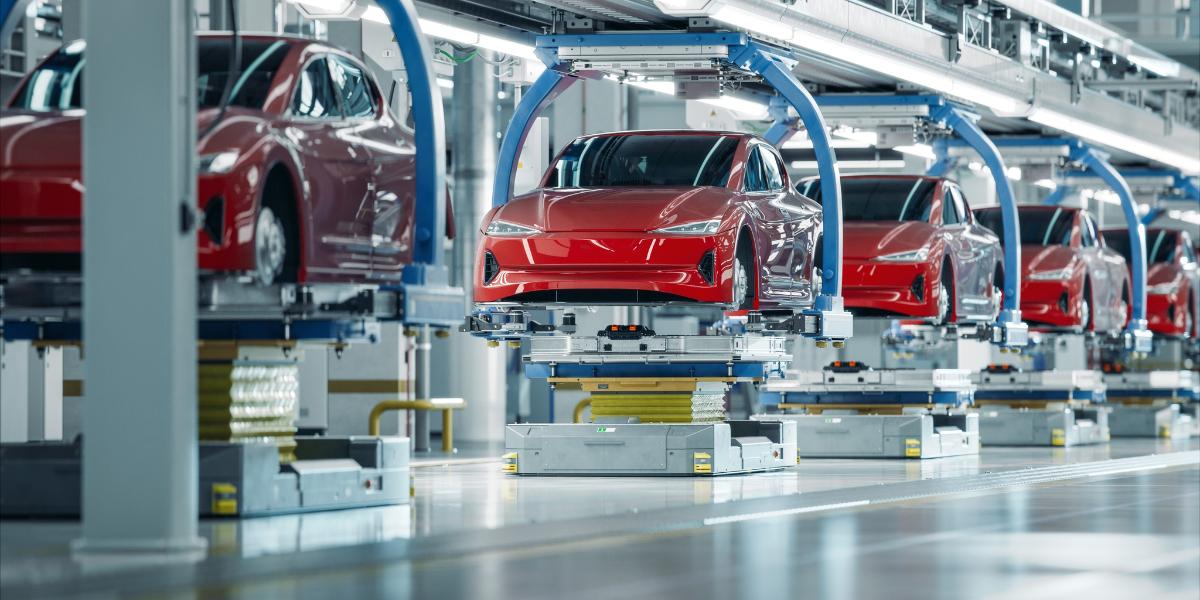
UK car production growth is officially back on the agenda.
After four straight months of decline, UK vehicle manufacturing output rose in May 2026, and EV production in the UK is playing a starring role in the recovery. If you’re a fleet decision-maker, this is more than a feel-good headline.
The health of British factories has a direct bearing on vehicle supply, lead times, pricing, and the pace of the EV transition, all of which shape the deals available to your fleet. In this post, we'll unpack the latest figures and explore the impact of car production on leasing over the months ahead.
Key takeaways:
- UK car output grew 3.2% in May 2026, ending four months of decline.
- Exports drove the rise, with shipments to the US up 83.1%.
- EVs and hybrids hit a record 41.7% share of UK production in 2025.
- The SMMT expects UK car production to grow by over 10% in 2026.
- Rising output should mean better supply, shorter lead times and sharper lease pricing for fleets
Ready to turn EV supply into fleet savings?
At SG Fleet, we’ve got an award-winning eStart transition plan that helps you electrify at the right pace and price. You can find out more about our leasing solutions here or get in touch for expert guidance.

What's behind the latest UK car production growth?
According to the Society of Motor Manufacturers and Traders (SMMT), UK vehicle manufacturing output rose 2.7% in May to 51,178 units, with car output up 3.2% to 49,249 units, reversing four months of decline. It's the first monthly rise of 2026 and a welcome one after what the SMMT described as one of the toughest years in a generation for British car making.
Exports did a lot of the heavy lifting.
Around three quarters of everything built in the UK heads overseas, and shipments to the US surged by 83.1% in May, helped along by the US-UK trade deal that came into force in June 2025.
Demand at home held broadly steady too, with car production for the UK market edging up 0.7%.
There's still ground to make up.
Year-to-date output remains down on 2024, and the SMMT has warned that high energy costs and trade uncertainty continue to squeeze manufacturers. Mike Hawes, the SMMT's chief executive, said the priority now is turning May's growth into a sustained recovery by making the UK a more competitive place to build and sell vehicles.
Even so, a return to growth after a difficult stretch is a genuinely encouraging signal for everyone who depends on a steady flow of new vehicles, fleets very much included. When UK vehicle manufacturing output rises, the whole supply chain feels the benefit, from factory floors to fleet car parks.
EV production is the UK’s recovery engine
When you look closer at this recovery, you see that electrification everywhere. In 2025, UK production of electric, plug-in hybrid and hybrid cars grew 8.3%, reaching a record 41.7% share of total output, even as overall volumes fell.
In other words, EV production in the UK is fast becoming one of the backbones of the country's automotive industry. Next-generation electric car production is ramping up in Sunderland, and several new EV models are planned for launch across UK factories this year, putting electrification right at the heart of the nation's manufacturing story.
That matters a lot for leasing.
Fleets and salary sacrifice schemes are among the biggest buyers of new EVs.
More domestic supply should mean better availability, more competitive pricing and a smoother path to electrification for businesses of every size. When EV production in the UK thrives, fleet customers are usually among the first to feel the benefit.
The impact of car production on leasing
So, what does the impact of car production on leasing actually look like in practice? Well, there are a few key areas to watch.
Vehicle supply and lead times.
When factories are busy, order banks flow more freely. Growing UK vehicle manufacturing output should gradually ease lead times on popular models, giving fleets more certainty when planning replacement cycles and contract end dates.
Pricing and monthly rentals.
Healthy production volumes tend to support competitive pricing. With manufacturers investing billions in zero-emission technology and needing to meet ZEV mandate targets, some are sharpening EV deals, savings that leasing providers can pass on through lower monthly rentals.
Residual values.
A steadier production pipeline supports a healthier used market over time, which feeds into the residual value forecasts that underpin lease pricing. Stronger, more predictable residuals generally translate into better value contracts for fleets.
The EV transition.
With EV production in the UK hitting record shares of output, businesses have a widening choice of home-built electric models. Combined with salary sacrifice growth across the industry, the conditions for fleet electrification look stronger than they have in years.

How should fleets respond?
Timing is everything in leasing. If UK car production growth continues as forecast, fleets that review their strategy now can take advantage of improving supply and sharper EV pricing. That might mean bringing forward parts of your electrification plan, revisiting lease end dates or exploring salary sacrifice as a low-cost route into EVs.
Want a leasing partner who turns market shifts into savings?
At SG Fleet, we've spent over 25 years helping UK businesses of all shapes and sizes get more from their fleets.
As the market rebounds and EV production in the UK accelerates, our team can help you capture the upside. Our eStart programme is a double award-winning, end-to-end EV transition plan that assesses your goals, reviews your fleet vehicle by vehicle, and builds a costed roadmap to electrification around your existing lease end dates.
And with our Novalease and Salarylease salary sacrifice schemes, your employees can access new or pre-loved EVs through one fixed, all-inclusive monthly payment, backed by our corporate buying power.
Get in touch with our team today; we'd love to help you make the most of the market's momentum.
FAQs
Is UK car production growing in 2026?
Yes. UK car output rose 3.2% in May 2026, the first monthly increase of the year, and the SMMT forecasts production will grow by more than 10% across 2026.
How does UK car production growth affect leasing costs?
Rising production improves vehicle supply, shortens lead times, and supports competitive pricing and residual values. Together, these factors can lower monthly lease rentals and give fleets better value contracts.
What share of UK car production is electric?
Electric, plug-in hybrid and hybrid vehicles made up a record 41.7% of UK vehicle output in 2025, and new EV models entering production are expected to push that higher.
Is now a good time to switch a fleet to EVs?
For many businesses, yes. Growing EV production, competitive manufacturer pricing, and tax-efficient salary sacrifice schemes make the transition more affordable than ever. A tailored plan like eStart helps you time it right.