


How Toyota's Multi-Pathway Electrification Strategy Is Shaping the Future of Australian Fleets
By SG Fleet | 22 July 2026

Insights from:
Jeremy Andrews | Senior National Fleet Manager (Rental & FMO), Toyota Australia
Michael Styles | National Manager, Disposal & Supplier Relationships, SG Fleet
Mitchell Smith | Team Manager, Disposal (Southern) Operations – Trade Maintenance, SG Fleet
Glen Besgrove | Manager, Dealer & OEM Relationships, SG Fleet
Amelia Atkins | General Manager, Marketing, SG Fleet
As the pace of fleet electrification continues to accelerate, understanding what comes next is becoming increasingly important for fleet managers balancing operational requirements, driver expectations and sustainability targets.
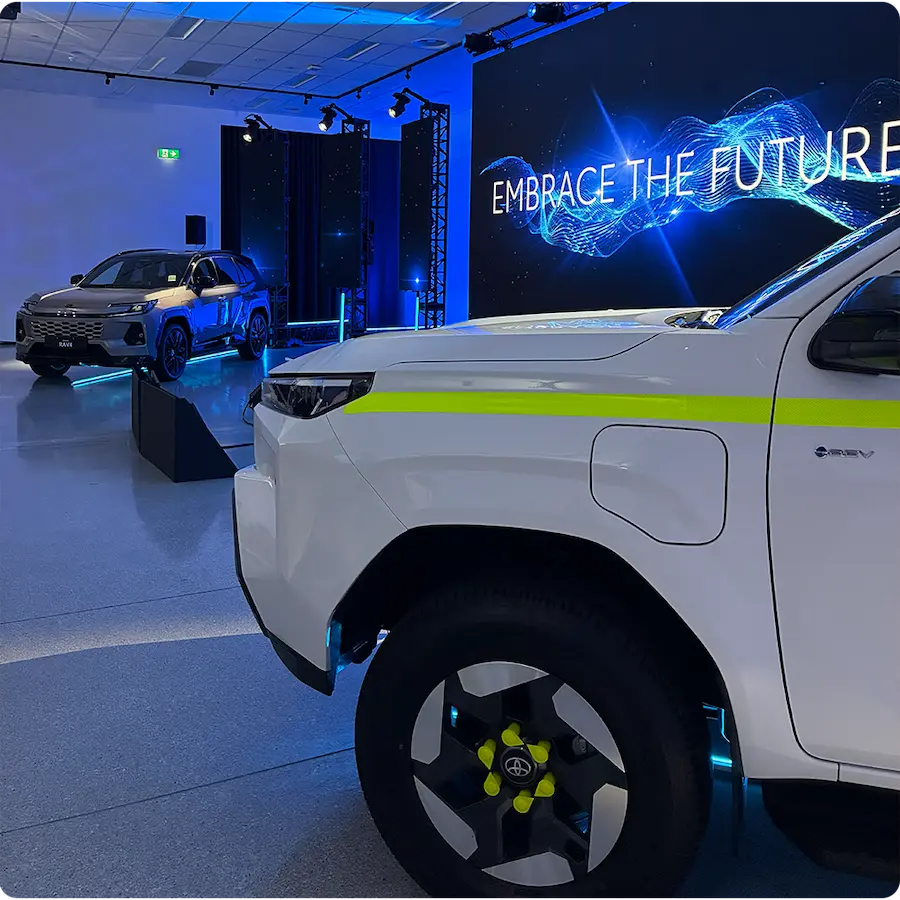
Recently, members of the SG Fleet team were invited to Toyota Australia's Centre of Excellence for an immersive experience exploring Toyota's evolving electrification strategy, future fleet roadmap and newest vehicle releases. The day combined technical education sessions, a behind-the-scenes factory tour and extensive vehicle testing, providing valuable insight into how one of Australia's most trusted automotive brands is approaching the transition to lower-emission mobility.
From the highly anticipated HiLux BEV to the expanded bZ4X range and upcoming RAV4 Plug-in Hybrid, Toyota's approach was clear: electrification is not one-size-fits-all. Instead, the focus is on offering practical solutions that align with the diverse needs of Australian fleets.
A practical approach to fleet electrification
One of the strongest themes throughout the day was Toyota's commitment to matching technology to customer use cases.
Rather than pushing full electrification into every segment immediately, Toyota is building a portfolio designed around how fleets actually operate. Whether that's a battery electric vehicle for predictable metropolitan routes, a plug-in hybrid for drivers covering varied distances, or a commercial vehicle supporting emissions reduction goals within specific operating environments, practicality remains front and centre.
For fleet operators, this reinforces an important lesson: successful electrification isn't about replacing every vehicle with an EV overnight. It's about identifying the right vehicle for the right task.
Beyond the vehicle: efficiency across the supply chain
The Centre of Excellence tour also provided an interesting look into how Toyota is improving efficiency throughout the vehicle lifecycle.
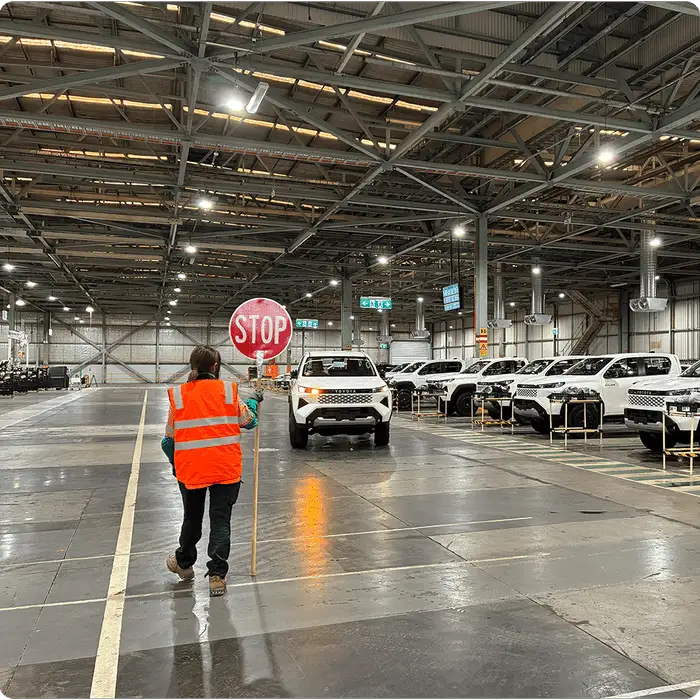
One standout observation was Toyota's accessory installation process. Vehicles can be fitted with dealer accessories before delivery, reducing logistics requirements and streamlining fleet deployment.
Michael noted "The way Toyota prepares vehicles with dealer accessories is impressive. Traditionally, the vehicle and accessories may be transported separately before installation. Bringing that process together helps improve efficiency and can ultimately reduce transport-related emissions."
It's a reminder that sustainability initiatives extend beyond vehicle technology alone and include manufacturing, logistics and delivery operations.
HiLux BEV: a practical first step into electric commercial vehicles
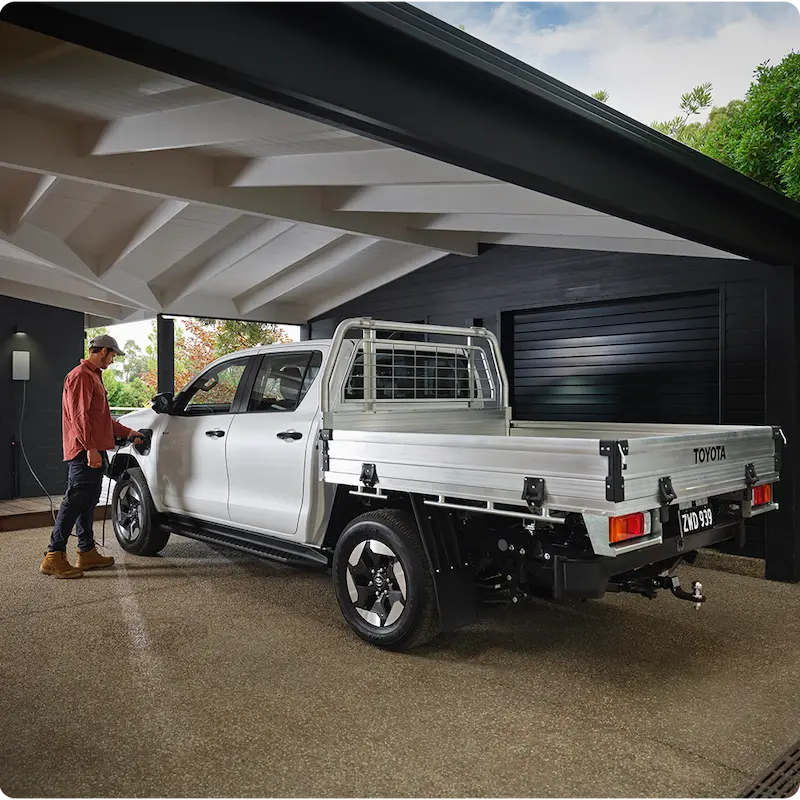
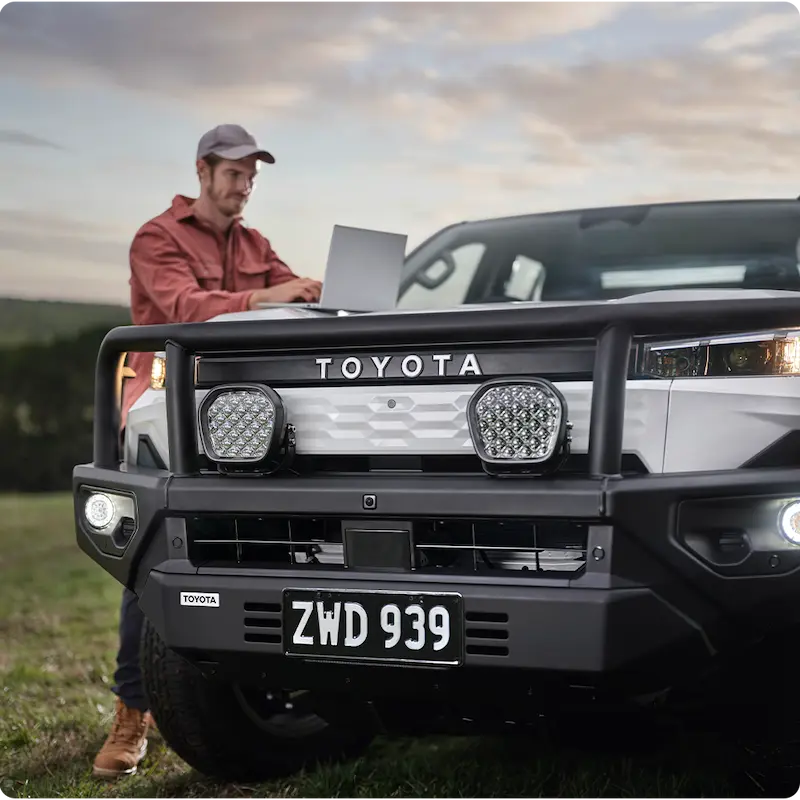
The vehicle attracting the most attention throughout the day was undoubtedly the HiLux BEV.
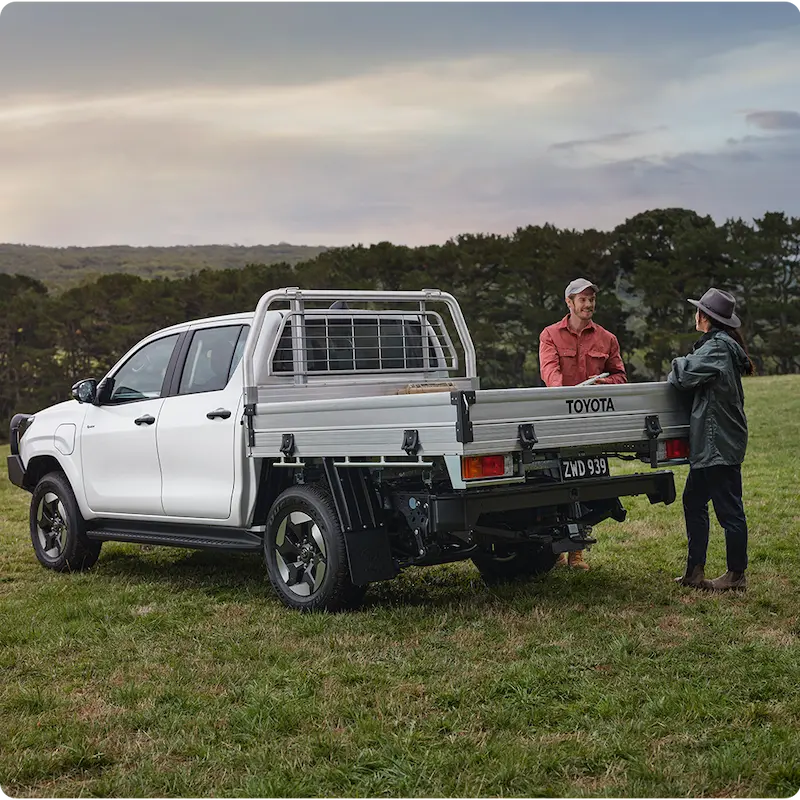
For years, fleet managers have been asking when electrification would meaningfully enter the light commercial vehicle market. Toyota's answer is a battery electric HiLux designed specifically for applications where operational requirements align with current EV capability.
Rather than trying to replace every diesel ute overnight, Toyota has developed a vehicle with clearly defined use cases and customer profiles.
Built for Australian conditions
The HiLux BEV features a dual-motor AWD electric powertrain powered by a 59.2kWh lithium-ion battery, delivering up to 315km of driving range in pickup variants and supporting up to 2,000kg of braked towing capacity.
The engineering focus has been on maintaining the capability customers expect from the HiLux nameplate while introducing electrification into commercial fleets.
One particularly interesting aspect was the battery packaging and protection strategy.
As Amelia observed:
"The thoughtful design around battery placement was particularly interesting. Because it's a vehicle expected to operate off-road and in harsher environments, Toyota has incorporated additional protection and positioned the battery higher to ensure it's fit for purpose."
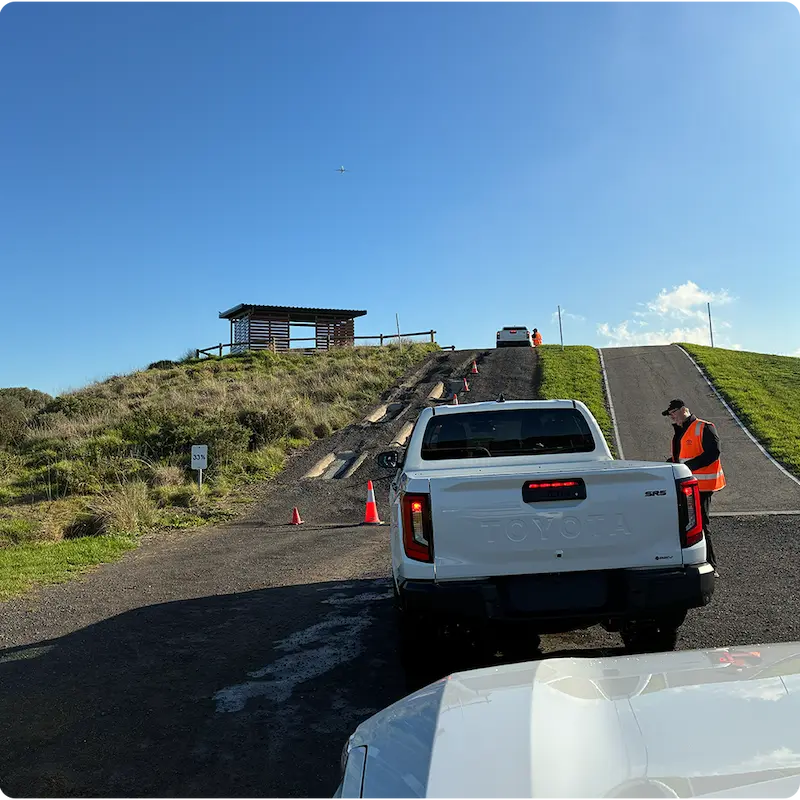
That attention to durability is important for fleets operating in environments where vehicle underbodies regularly encounter rough terrain, worksite conditions and off-road travel.
Mitchell also highlighted how Toyota has approached commercial fleet usability alongside durability.
"The BEV HiLux still drove and felt like a HiLux, just minus the noise from under the bonnet. Controls are more or less the same as a diesel HiLux, so it would be easily slotted into existing HiLux fleet customers."
Maintaining familiar vehicle layouts and driver interfaces may prove particularly valuable for organisations looking to transition drivers to electric vehicles with minimal disruption to day-to-day operations.
Familiar behind the wheel
Perhaps the biggest surprise was how little adjustment was required when driving the vehicle.
The HiLux BEV remains unmistakably a HiLux.
Michael noted:
"The ute drives very well and is comparable to a diesel variant from a driving perspective."
During testing, the vehicle comfortably handled the off-road course while showcasing some of the unique benefits of electrification.
"The downhill descent without touching the brake was something different for me to experience."
This familiarity may prove one of the HiLux BEV's greatest strengths from a fleet perspective. Driver acceptance remains a key factor in successful EV adoption, and minimising behavioural change can ease transition challenges.
Not for every fleet, but ideal for the right fleet
Toyota is taking a refreshingly realistic approach to positioning the HiLux BEV.
Range remains lower than passenger EVs, but that is a common trade-off in electric commercial vehicles where payload, towing capability and durability are prioritised.
Toyota Australia, Senior National Fleet Manager, Jeremy Andrews explained:
"Toyota Australia welcomes the HiLux BEV to fleet customers across the country. The HiLux BEV has been tested in some of Australia's harshest mining conditions, operating alongside the diesel variant to validate real-world performance."
"Developed with a clear focus on getting the job done, it features a balanced engineering approach that optimises battery size, payload and towing, while preserving the core strengths that define HiLux."
Toyota has identified several ideal customer profiles including councils, government fleets, utilities, construction supervisors, enterprise fleets and mining operations with internal travel requirements.
Michael summarised it simply:
"Range is low, however that's expected for a commercial ute, especially when carrying weight. It will appeal to a 'back-to-base' fleet where vehicles are parked on-site overnight."
Mitchell reinforced Toyota's practical positioning of the vehicle and the importance of matching capability to operational requirements.
"BEV range becomes significantly impacted by the addition of accessories or significant loads such as plant trailers. Any customers looking to lease need to ensure their requirements fit within the vehicle's capabilities."
His comments reflect a broader consideration for fleet managers evaluating electric commercial vehicles: understanding real-world operating conditions remains critical when assessing suitability and total fleet performance.
For organisations with predictable routes, low daily kilometre requirements and access to depot charging, the HiLux BEV presents an opportunity to begin electrifying commercial vehicles without compromising operational capability.
Perhaps most importantly, it provides a practical pathway for fleets to start building driver familiarity with EV technology in the commercial vehicle segment.
bZ4X and bZ4X touring: expanding Toyota's electric fleet options
Toyota's dedicated EV offering continues to evolve with the updated bZ4X and the introduction of the all-new bZ4X Touring.
Together, they represent an increasingly compelling proposition for fleets seeking a fully electric passenger vehicle.
bZ4X: range, reliability and everyday practicality
The updated bZ4X addresses one of the most common barriers to EV adoption: range confidence.
With the 2WD variant delivering up to 591km of range, many fleet applications can now be accommodated without significant operational change.
Jeremy Andrews believes this is a significant milestone for fleet customers.
"From a fleet perspective, the new bZ4X just ticks all the right boxes. It always comes back to Toyota reliability; it's what our customers expect."
"Then you layer in the practicality of a proper, dedicated SUV platform and it really starts to make sense. With the 2WD now pushing out to around 591km of range, it genuinely feels like fleets can make the switch to EV without overthinking it."
From the SG Fleet team's perspective, the vehicle delivered a strong balance of performance, comfort and usability.
Michael noted "It's feature-heavy but still has physical dials, unlike some EVs we're seeing in the market."
Having previously driven the original bZ4X, Mitchell noted the progression Toyota has made with the updated model range.
"Having driven the first model bZ4X previously, the Tourer felt more refined."
He also pointed to the benefits of continuity for existing Toyota customers.
"Existing Toyota vehicle customers could easily adapt to the EV vehicle as controls and functions are familiar to other Toyota products. Controls still used physical buttons and as such did not require searching through touch screen menus, which is a positive."
For fleets managing vehicle change programs, that familiarity may help reduce driver training requirements and support faster adoption.
Combined with generous rear passenger space, strong safety credentials and competitive driving range, the bZ4X is likely to appeal to urban fleets, sales teams and novated lease customers alike.
bZ4X touring: the Wagon returns
One of the most interesting announcements from the day was the new bZ4X Touring.
At a time when SUVs have dominated Australian buyer preferences for more than a decade, the Touring delivers additional cargo capacity and practicality while retaining the benefits of an EV drivetrain. For fleets requiring more luggage space, equipment storage or travelling sales teams, the Touring could offer an attractive alternative to larger SUVs.
Michael was particularly impressed by the vehicle's performance and practicality.
"There's plenty of space in the back and a lot of acceleration."
"It drove very well around the track."
In many ways, the Touring may represent a return to one of the fleet market's most practical vehicle formats, updated for Australia's electric future.
RAV4 plug-in hybrid: bridging the gap
Few vehicles have established themselves within Australian fleets as successfully as the Toyota RAV4.
The upcoming Plug-in Hybrid variant builds on that reputation by offering organisations another pathway towards lower-emission mobility.
For fleets not yet ready to fully commit to battery electric vehicles, the RAV4 Plug-in Hybrid provides an effective middle ground. Drivers can complete shorter journeys using electric power while retaining the flexibility of Toyota's proven hybrid system when charging isn't available.
A key advantage identified during the sessions was the vehicle's ability to continue operating efficiently even when not plugged in.
As Michael explained:
"It runs as a genuine RAV4 Hybrid if it's not charged, unlike some vehicles in this space."
That flexibility will be particularly valuable for organisations operating across both metropolitan and regional environments where charging infrastructure may vary.
Mitchell believes plug-in hybrid vehicles will appeal strongly to certain customer segments, while acknowledging some of the behavioural factors that influence fleet outcomes.
"I would expect the uptake for the plug-in vehicles to mainly be retail customers. To get the full benefit from the plug-in hybrid, customers would still need to charge the vehicle as they would a BEV, which fleet drivers have traditionally not been the best at."
His observation highlights one of the ongoing considerations for fleet operators evaluating plug-in hybrid technology: vehicle performance can vary significantly depending on charging compliance and driver behaviour.
The higher specification grades may initially position the vehicle more towards management and executive fleets, but the strength of the RAV4 brand should ensure strong interest from organisations looking to progressively reduce emissions without changing operational behaviour.
As Michael advised:
"RAV4 is still king of fleets in general, so it has the credibility of the name."
Looking ahead
The biggest takeaway from Toyota's Centre of Excellence was not simply the vehicles themselves, but the strategy behind them.
Rather than pursuing electrification for its own sake, Toyota is focused on delivering practical solutions that align with how fleets actually operate.
Whether it's the HiLux BEV supporting depot-based commercial operations, the long-range bZ4X addressing passenger fleet requirements, the practical new bZ4X Touring bringing wagon versatility back to the market, or the RAV4 Plug-in Hybrid providing a transitional step for organisations not yet ready for full EV adoption, each vehicle serves a clear purpose.
For fleet managers, that's perhaps the most valuable insight of all: the future of fleet electrification isn't about choosing one technology. It's about choosing the right vehicle for the right application, at the right time.
Looking to upgrade your fleet?
Speak with one of our fleet specialists to explore the right vehicles, pricing and solutions for your business.
Learn more