


Kia PV5 Cargo Long Range: What a purpose-built EV could mean for commercial fleets
By SG Fleet | 08 October 2026
Insights from:
Bryce Grove | National Manager, Trade Operations NZ, SG Fleet
Craig Porter | General Manager, Commercial Fleet, Client Relationships, SG Fleet
Michael Walsh | State Manager, Client Relationships – WA, SG Fleet
Peter Brown | Fleet Sales Manager, Kia Australia
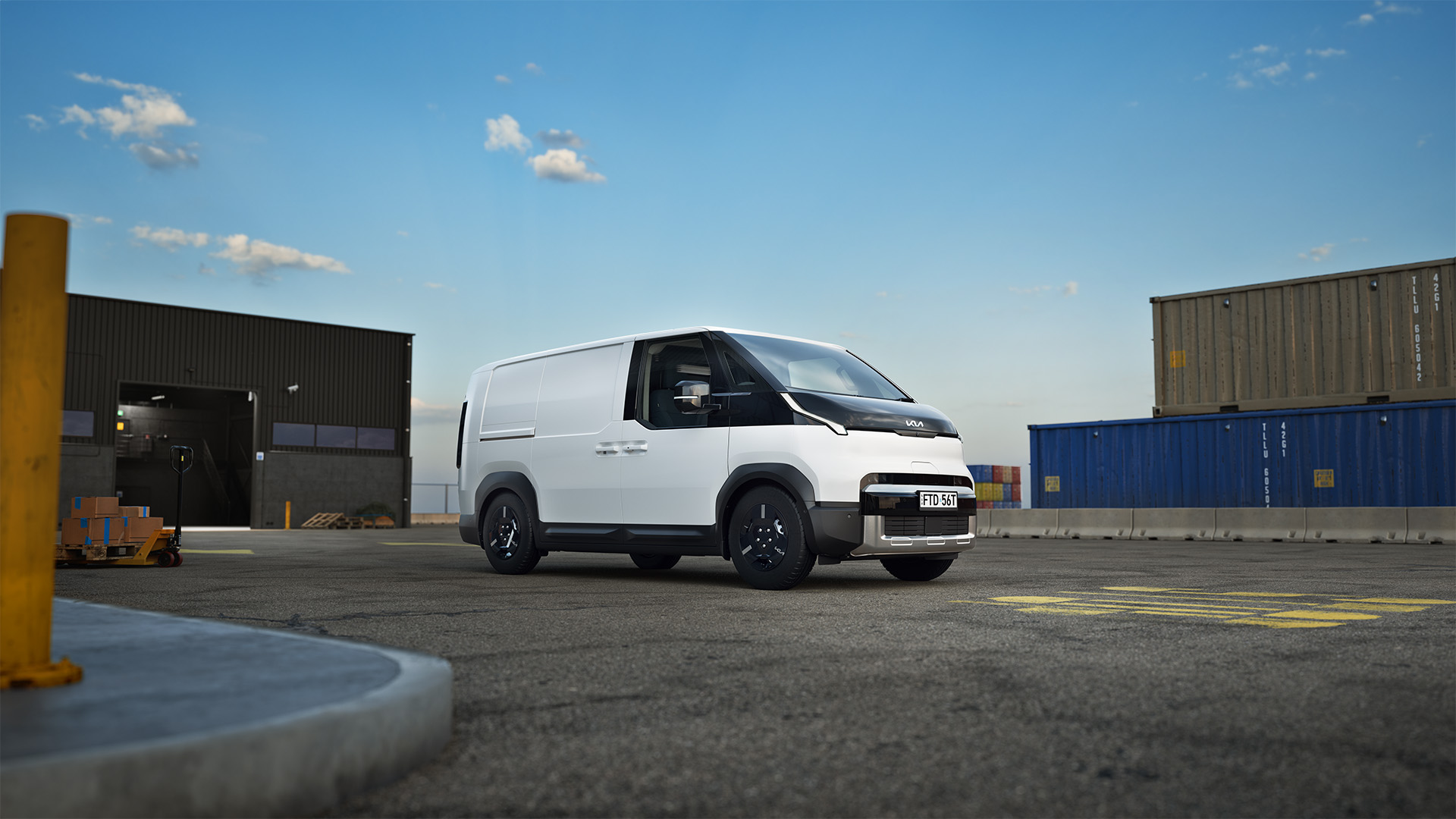
As electrification gains momentum across the transport sector, purpose-built commercial EVs are beginning to reshape what's possible for fleet operations. One vehicle generating significant interest is the Kia PV5 Cargo Long Range.
The PV5 marks an interesting milestone for Kia, as the manufacturer enters the electric vehicle market with its first dedicated commercial electric vehicle built on its new Platform Beyond Vehicle (PBV) architecture. Rather than adapting an existing commercial vehicle for an electric powertrain, Kia has started with a platform developed specifically around electric mobility and commercial use.
For Peter Brown, Fleet Sales Manager at Kia Australia, the introduction of the PV5 represents something much bigger than a new van launch.
"Kia has developed the PBV, or Platform Beyond Vehicle, as a dedicated commercial EV platform that can be mixed and matched for multiple commercial applications."
Designed specifically for business use, the PV5 offers a glimpse into the future of commercial mobility while addressing many of the practical challenges fleet operators face today.
Built from the ground up for commercial fleets
Many electric vans currently available have evolved from passenger vehicle platforms or traditional internal combustion vehicle architectures.
The PV5 takes a different approach.
Built on Kia's dedicated E-GMP.S platform, it has been engineered specifically for commercial applications, allowing cargo space, efficiency, connectivity and operational flexibility to be considered from the outset.
Peter Brown describes the timing simply:
"The PV5 is the right vehicle at the right time."
That confidence is already being reflected internationally. The PV5 has been recognised as the International Van of the Year 2026 and recently achieved a Guinness World Record title after travelling 693.38 kilometres on a single charge while carrying its maximum payload. It’s an impressive test of the PV5’s capability.
For fleet operators evaluating future vehicle strategies, those achievements reinforce Kia's commitment to delivering a commercial EV capable of real-world performance.
A closer look at the numbers
While the PV5's platform and innovation story are compelling, fleet operators ultimately need vehicles that can perform in demanding operational environments.
The PV5 Cargo Long Range delivers:
Powertrain and battery
- 120kW electric motor
- 250Nm of torque
- Front-wheel drive configuration
- 71.2kWh lithium-ion battery
- Up to 416km WLTP driving range
- Energy consumption of 191Wh/km
Charging capability
For many fleets, charging performance is one of the most important considerations when evaluating an EV transition.
The PV5 offers:
- 10-80% charge in approximately 30 minutes using a 350kW DC fast charger
- 10-80% charge in approximately 61 minutes using a 50kW charger
- Full AC charging in approximately 6.5 hours using an 11kW charger
This flexibility allows organisations to align charging schedules with operational requirements, whether charging overnight at base or topping up during the day.
Cargo and practicality
An electric van still needs to deliver on the fundamentals of a commercial vehicle, and the PV5 brings plenty of usable space to the equation.
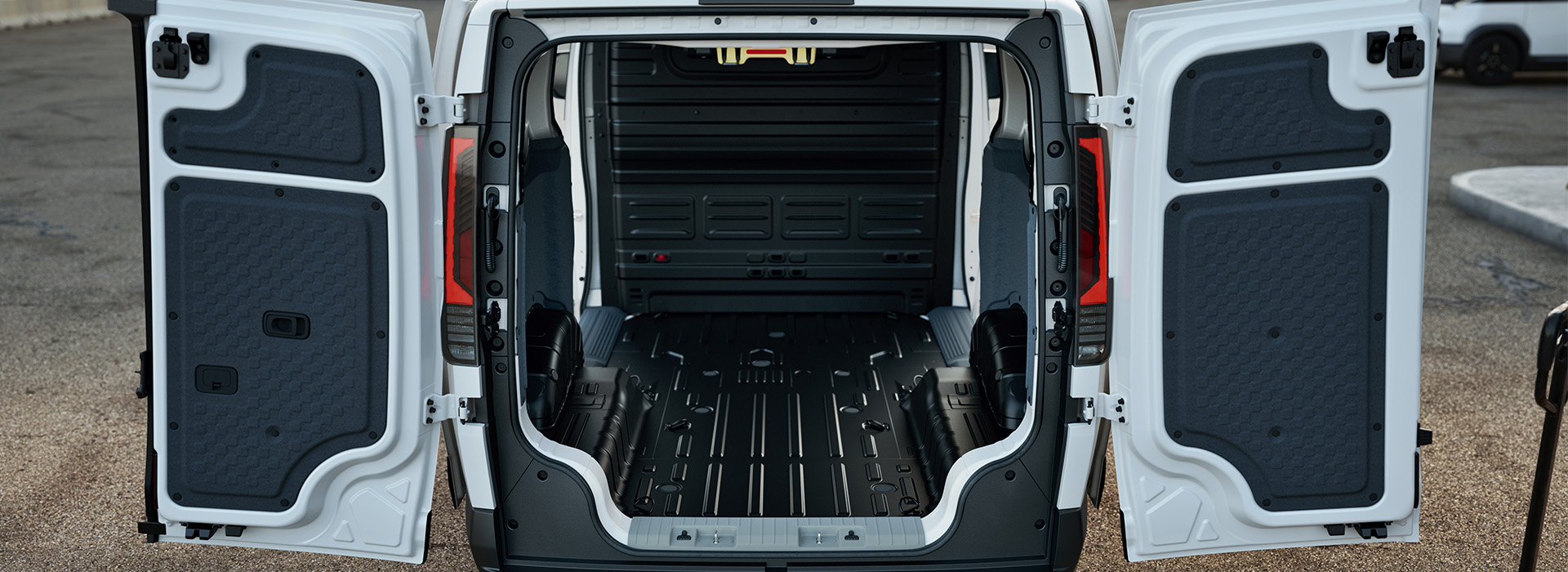
Key dimensions include:
- 4,420 litres of cargo capacity
- 2,255mm maximum cargo length
- 1,565mm cargo width
- 1,520mm cargo height
- 740kg payload capacity
- Dual sliding doors
- Twin rear swing doors
- Eight cargo tie-down points
For fleet operators, these dimensions create flexibility across a range of fleet applications, from service and maintenance fleets through to urban logistics and delivery operations.
Where does the PV5 fit within a modern fleet?
Vehicle suitability starts with understanding how a vehicle will actually be used.
For Bryce Grove, our National Manager, Trade Operations NZ, that puts the PV5 firmly in the conversation for predictable metropolitan operations:
"The Kia PV5 Cargo Long Range is ideally suited to fleets operating in predictable metropolitan environments where vehicles return to base regularly."
That predictability can work particularly well with electrification. When daily kilometres are understood and vehicles regularly return to a known location, charging can be planned around the fleet’s existing operating pattern.
Bryce also sees strong potential across:
- Last-mile delivery operations
- Service and maintenance fleets
- Local government fleets
- Sustainability-focused organisations
- Campus and site-based operations
Understanding those use cases can help organisations identify where that opportunity is strongest.
"Organisations should consider factors such as daily kilometres travelled, vehicle utilisation, route predictability, charging infrastructure, sustainability objectives and total cost of ownership."
Craig Porter, our General Manager, Commercial Fleet, Client Relationships, sees the same consideration at a broader fleet level:
"ESG has a growing focus and the blend of sustainability without an impact on payload or operational efficiency is a delicate balance."
As more purpose-built commercial EVs enter the market, vehicles such as the PV5 are giving fleet operators more options to balance electrification ambitions with day-to-day operational requirements.
The driver experience
A commercial vehicle's success isn't measured solely by the specification. Driver experience matters too, particularly where vehicles cover repeated routes or spend long hours on the road.
Early feedback has been overwhelmingly positive. Peter Brown notes that "client feedback across the board is that the PV5 is the best-driving van they have ever been in."
Michael Walsh, our State Manager, Client Relationships - WA, came away with a similarly positive impression after driving the PV5:
"Smooth, quiet, had good range, good tech, ergonomics, storage and safety. Cargo area was spacious. Drove like an EV so punchy and well planted on the road."
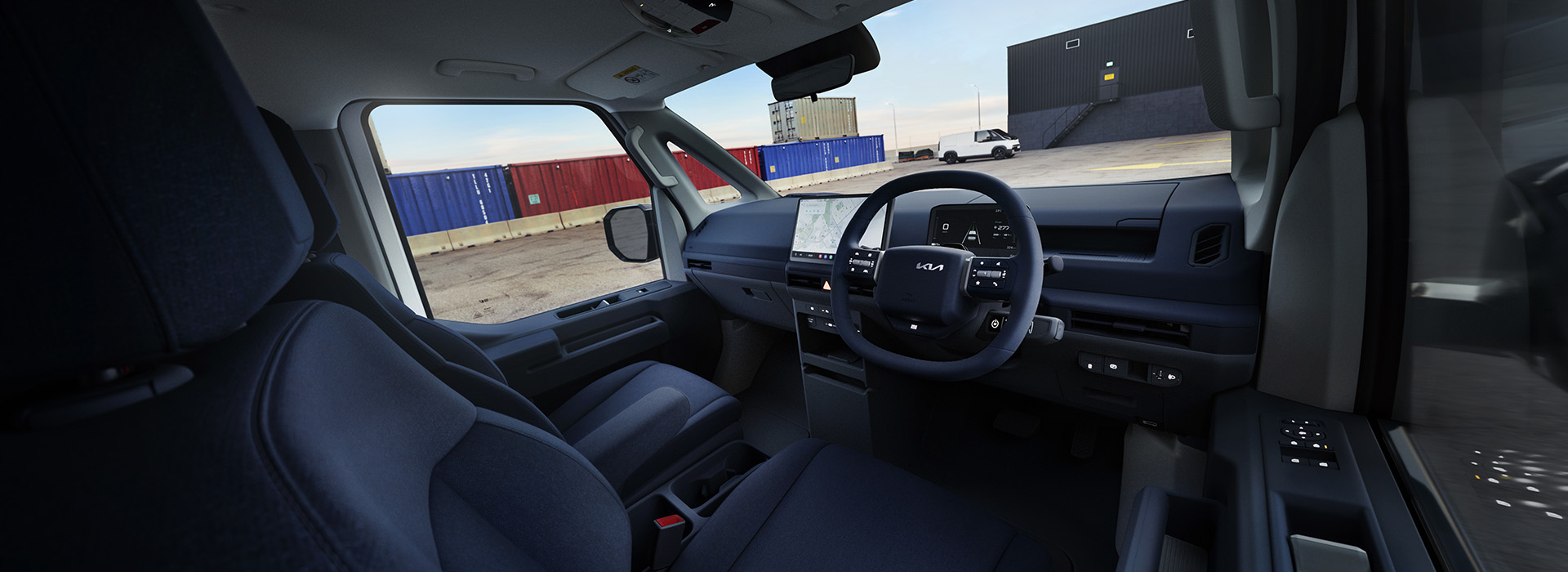
That experience is supported by a cabin that brings together comfort, connectivity and technology for the working day.
The cabin includes:
- 12.9-inch infotainment display
- 7.5-inch digital instrument cluster
- Wireless Apple CarPlay and Android Auto
- Wireless phone charging
- Kia Connect telematics
- Over-the-air software updates
- Smart Cruise Control
- Driver attention monitoring technology
For businesses increasingly focused on driver wellbeing and retention, these features help create an experience that feels closer to a modern passenger vehicle than a traditional commercial van.
More than just an electric van
While the electric powertrain naturally attracts attention, several additional features help distinguish the PV5 from traditional commercial vehicles.
One standout is the vehicle-to-load (V2L) capability, allowing energy stored in the battery to power tools, equipment and other electrical devices directly from the van.
For mobile service, maintenance and trade fleets, that functionality creates new opportunities to improve productivity in the field.
It’s a feature that stood out to Bryce Grove:
"For me the Kia PV5 stands out for its low loading height, flexible load space, and modern connectivity that help improve day-to-day fleet productivity. vehicle-to-load capability, and over-the-air software updates, is functionality that is a standout feature for service and trade fleets."
Other EV-focused features include:
- Smart regenerative braking
- One-pedal driving capability
- Scheduled charging functionality
- Utility Mode operation
Together, these features show how the benefits of a purpose-built electric platform can extend beyond range and emissions, creating new ways for the vehicle to support the work happening around it.
Looking ahead
The arrival of the Kia PV5 reflects a broader shift in commercial vehicle thinking.
Fleet operators are increasingly seeking vehicles that align with sustainability objectives, support driver wellbeing, improve operational efficiency and reduce whole-of-life costs, without sacrificing practicality.
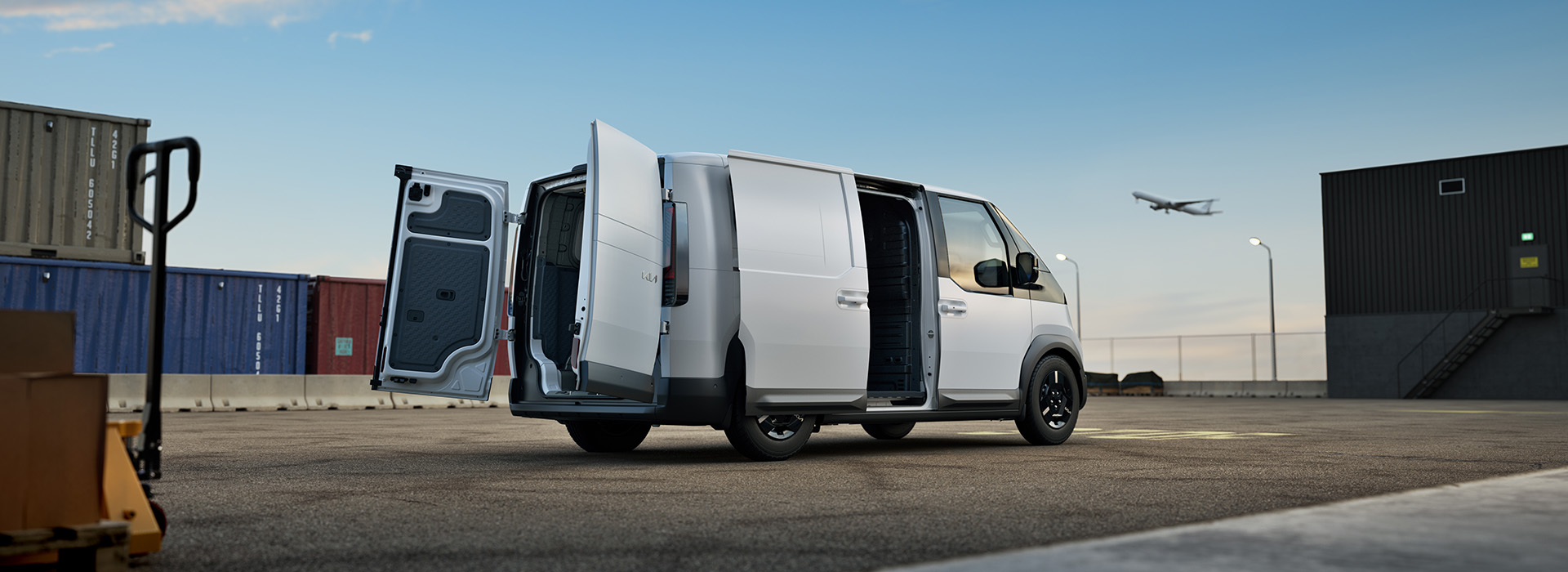
By combining a purpose-built commercial EV platform, strong range capability, advanced technology and thoughtful fleet-focused design, the PV5 presents a compelling option for organisations ready to begin or accelerate their electrification journey.
As Craig Porter notes, vehicle technology and driver safety are no longer differentiators, they're expectations. The challenge for fleet operators is identifying solutions that meet those expectations while remaining fit for purpose.
For metropolitan and return-to-base fleets, the Kia PV5 could be exactly that solution.
Looking to upgrade your fleet?
Speak with one of our fleet specialists to explore the right vehicles, pricing and solutions for your business.
Learn more