


Navigating change: insights from our industry leaders’ panel
By SG Fleet | 09 October 2026
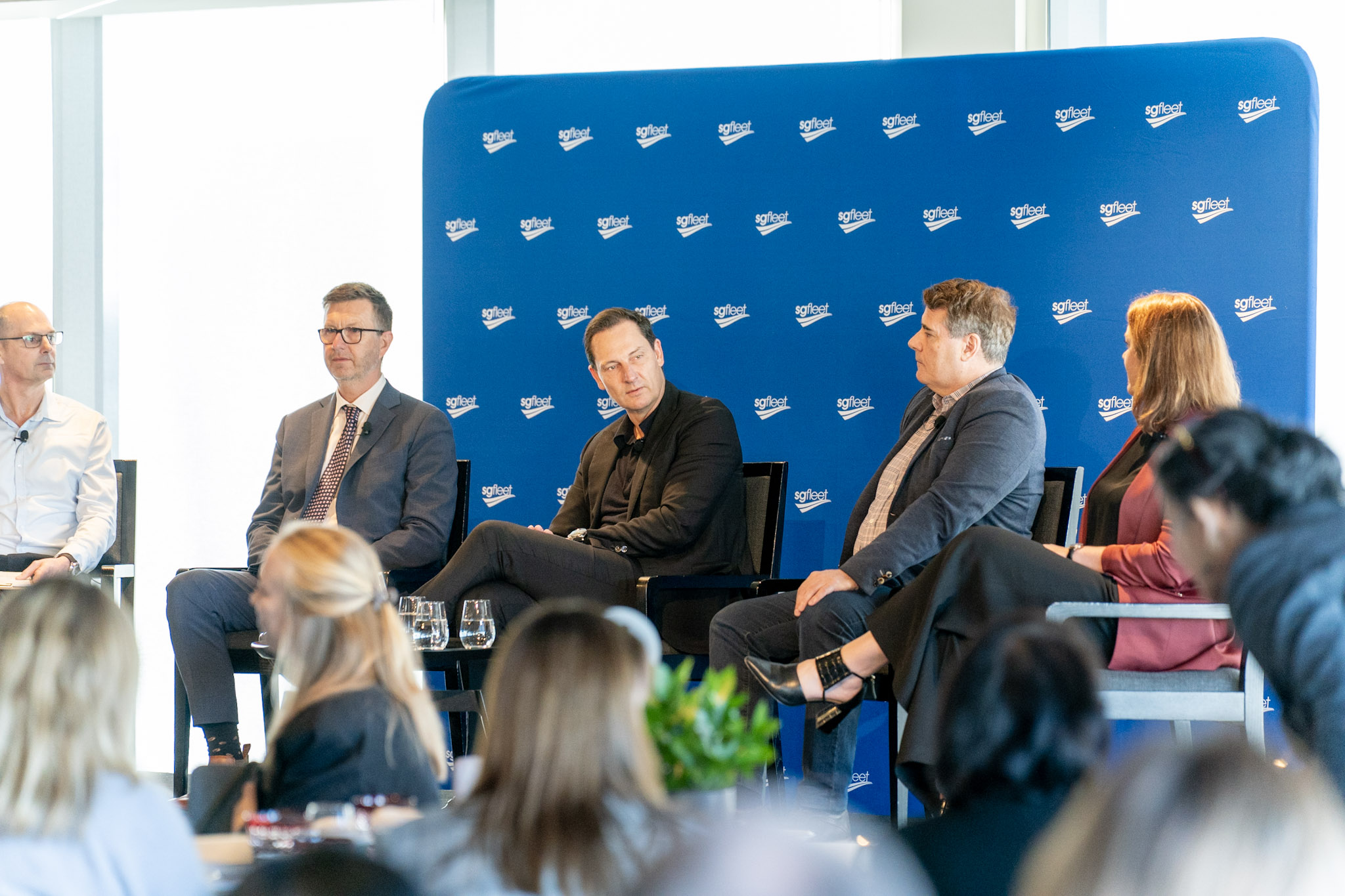
New Zealand’s fleet sector is entering a period of significant transformation. From road funding reform and electrification to the emergence of new vehicle brands and connected technologies, fleet operators are navigating an increasingly complex environment.
We recently brought together leaders from across government, automotive, and fleet to discuss the future of transport in New Zealand.
Facilitated by Bryce Grove, National Manager Trade Operations at SG Fleet, our panel featured:
- Simon Court | ACT MP, Under-Secretary for Infrastructure and RMA Reform, and Member of the Transport and Infrastructure Committee
- Dane Fisher | General Manager, NordEast
- Terry Lydon | General Manager Direct Sales and New Business, Toyota NZ
- Kimberley Gargiulo | Head of New Zealand, SG Fleet NZ
Several themes emerged throughout our discussion, offering valuable insights for organisations looking to build resilient, cost-effective, and future-ready fleet strategies.
Here are our five key takeaways.
Fleet operators should prepare for the shift to universal Road User Charges
One of the most significant regulatory changes facing fleet operators is New Zealand’s planned transition to universal Road User Charges (RUC).
While RUC has traditionally applied to diesel vehicles and was extended to EVs and PHEVs in 2024, the Government’s long-term vision is a distance-based user-pays system for all vehicles, replacing fuel excise tax.
While full implementation of universal RUC has been earmarked for 2027, the government has yet to provide a firm date. Simon acknowledged the scale and complexity of this project, including that the transition is unlikely to be a simple switch from one road funding system to the other, stating, “we’re likely to have both for at least the foreseeable future.”
The implications extend beyond compliance. Fleet operators may need to reassess total cost of ownership, vehicle utilisation, driver reimbursement policies, and operational reporting. As we await greater clarity on implementation timelines and digitisation requirements, many of our clients are already evaluating how a more usage-based charging system could affect fleet costs and operations.
While details are still emerging, the direction of travel is clear: understanding RUC, alongside fuel excise, and its potential business impacts should be part of fleet planning discussions today.
Electrification is becoming a business decision, not a policy decision
While EV adoption softened following the removal of the Clean Car Discount (CCD) in late 2023, our panellists agreed that interest in lower-emission vehicles did not disappear. Instead, the market has entered a more mature phase, with organisations evaluating vehicles based on operational suitability and total cost of ownership rather than government incentives.
Kimberley explained that where the CCD once had significant influence on fleet purchasing decisions, the organisations achieving the best outcomes today are taking a pragmatic approach: "We’re seeing organisations now doing their analysis, deploying vehicles where they make commercial and operational sense, and building from there.”
While the CCD, economic conditions, and fuel price fluctuations have all influenced EV demand in recent years, the panel noted that the biggest change has been the narrowing price gap between electric and internal combustion engine (ICE) vehicles. As Dane noted, "the fundamental thing that's happened since 2023 to now is we basically have price parity with ICE vehicles."
Our takeaway is that electrification is no longer driven by policy settings. Instead, adoption is being shaped by business requirements, operational fit, and total cost of ownership, supported by improving economics, greater model availability, and growing confidence in the technology.

The rules of automotive competition are being rewritten
The emergence of new brands is reshaping New Zealand's automotive market. With a combination of advanced technology, electrified powertrains, and competitive pricing, newer manufacturers are gaining market share and challenging established players.
Terry highlighted how consumer behaviour is evolving. Despite Toyota's long-standing reputation for "quality, durability, and reliability", even traditionally loyal customers are exploring alternative brands, while younger buyers are increasingly prioritising technology and features.
The pace of change is also accelerating. While it took Toyota 22 years to become New Zealand's number one automotive brand, newer entrants are establishing a meaningful presence much faster. As Dane observed, "Chinese share is 27% of the market this year, last year it was 13%."
However, he also cautioned that not every new entrant will succeed. While more than 100 Chinese automotive brands have emerged globally, he expects only a select group to establish lasting positions, predicting that "there's going to be an unbelievable shake up in the next few years."
While increased competition is expanding vehicle choice, the discussion highlighted that fleet operators must look beyond price and specification. Kimberley explained that SG Fleet applies rigorous due diligence before introducing new manufacturers to customer fleets, assessing factors such as parts availability, service coverage, technician capability, warranty provisions, and after-sales support. As she noted, "the most important thing for us is keeping customers' vehicles on the road."
For fleet operators, success will depend on balancing innovation and opportunity with careful due diligence.
There is no one-size-fits-all pathway to decarbonisation
While electrification dominated much of the discussion, the panel agreed there is no single powertrain that will suit every fleet. With manufacturers investing across EVs, PHEVs, hybrids and hydrogen technologies, organisations have more options to align lower-emission vehicles with operational requirements.
The challenge is often less about selecting a technology and more about identifying where each technology performs best. While concerns around charging infrastructure and vehicle downtime remain, advances in vehicle capability are helping address some barriers. Dane noted that many EVs now offer 450 to 500km of range, while newer PHEVs can deliver combined ranges approaching 1,000km, with even longer-range models still to come.
However, vehicle capability is only part of the equation. Simon acknowledged the ongoing challenge of electricity network capacity and charging infrastructure, noting that supporting infrastructure will take time to scale across New Zealand.
Against this backdrop, the panel advocated a pragmatic, multi-powertrain approach to their fleet portfolio; successful decarbonisation is about deploying the right vehicles for the right applications.
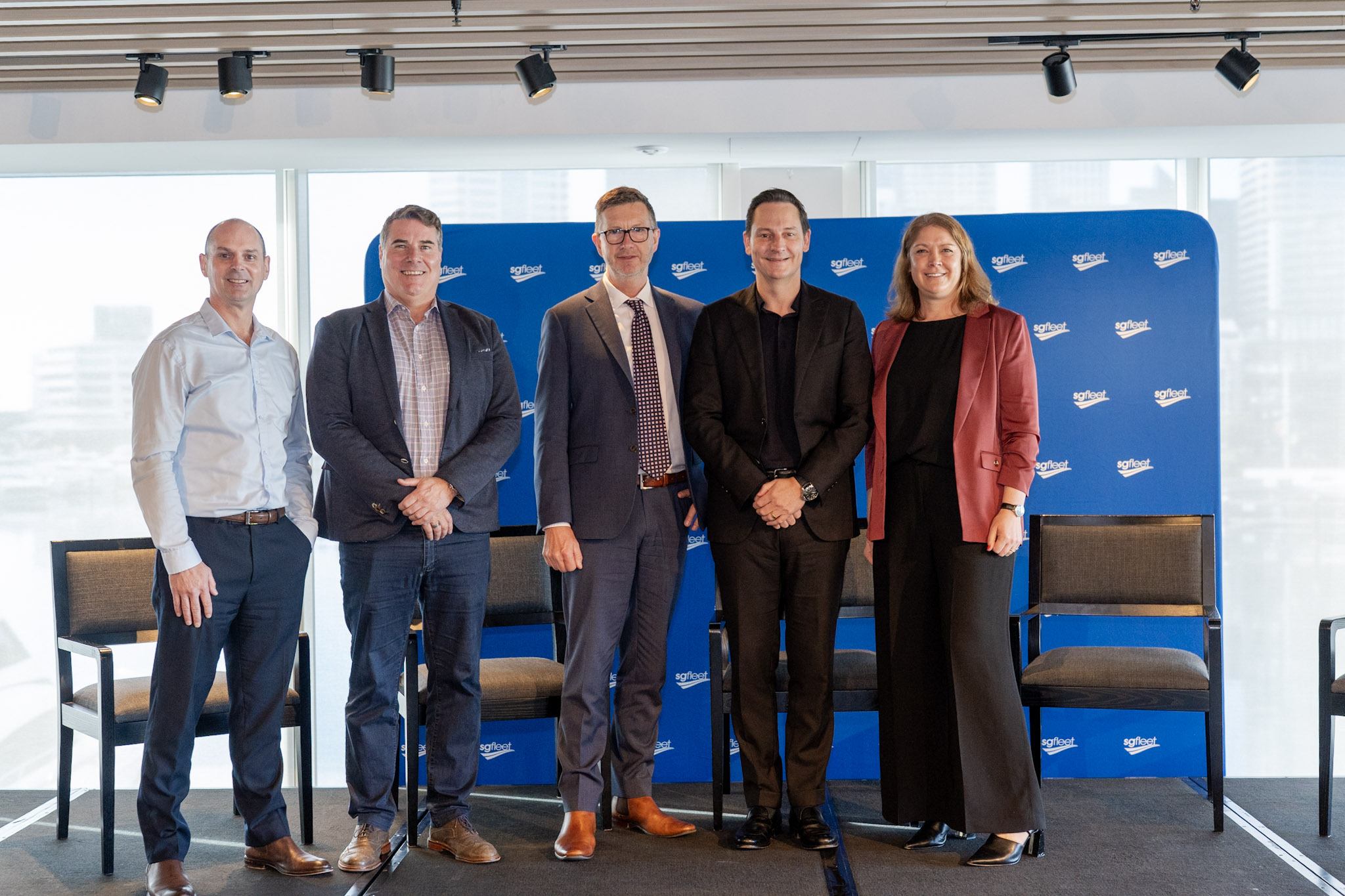
Left to right: Bryce Grove, Terry Lydon, Simon Court, Dane Fisher, Kimberley Gargiulo.
The future of fleet management will be driven by data and insight
While much of the discussion focused on vehicles, policy and technology, the panel also explored the growing role of data in fleet management.
As vehicles become increasingly connected, organisations have access to more information than ever before. The challenge is no longer collecting data but turning it into actionable insights. From vehicle utilisation and maintenance planning to driver behaviour and cost optimisation, connected vehicle technologies are creating new opportunities to improve fleet performance.
Kimberley explained that this is a key area of focus for SG Fleet, with our Innovation team exploring how vehicle data can deliver greater value to customers, applying it to improve operational, financial, and sustainability outcomes. This thinking is shaping SGonline, our new digital platform, which is designed to bring fleet portfolios, vehicle information, and mobility solutions together in a single interface.
As fleet management continues to evolve, the organisations that can effectively convert data into insight will be best positioned to improve efficiency, reduce costs, and make better long-term decisions.
Navigating what's next
The panel reinforced a clear reality for fleet operators: change is already underway. Whether it's evolving road funding models, the rise of new automotive brands, changing approaches to electrification or the growing importance of connected vehicle data, fleet operators face a broader range of decisions than ever before.
Success will depend on making informed choices backed by the right information, expertise, and long-term perspective. At SG Fleet, our focus is helping clients navigate complexity with confidence, ensuring their fleet strategy remains aligned to the realities of today while being prepared for the future.
Looking to upgrade your fleet?
Speak with one of our fleet specialists to explore the right vehicles, pricing and solutions for your business.
Learn more